

Pricing the Risk of the Rock Star CEO
By Doug Stephens
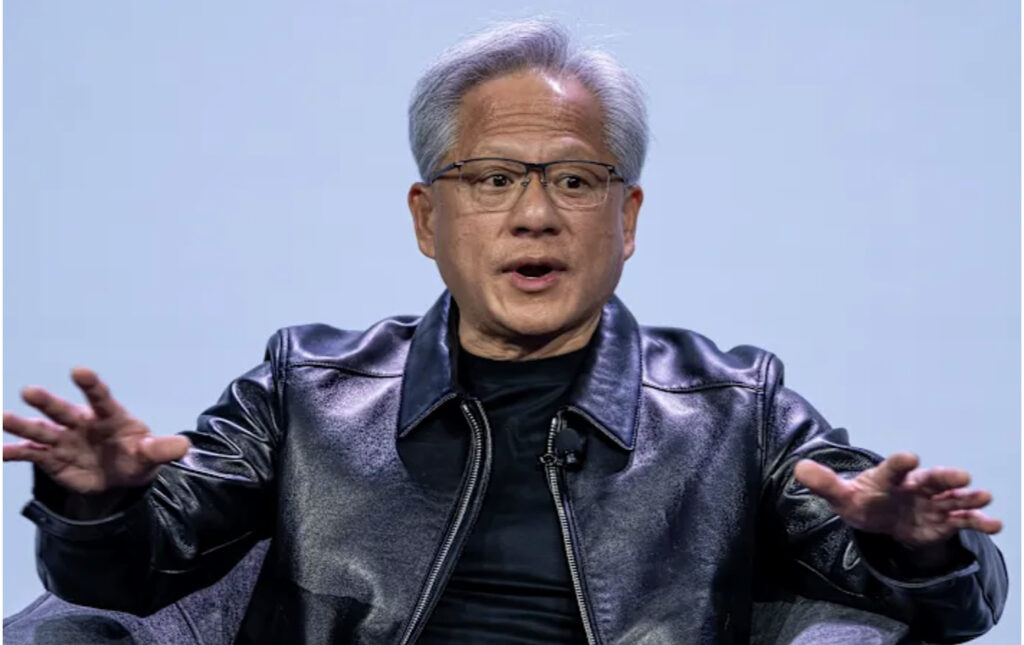
In a tech industry already starved of public trust, Jensen Huang has just burned through a little more of it.
On November 8, the Nvidia CEO admitted an extramarital affair with a woman whom US intelligence reportedly suspected of spying for China.
Perhaps worse, US President Donald Trump had reportedly been briefed on the suspected operation roughly a year earlier and did nothing. There was no warning to shareholders, the public, or even Huang himself. Meanwhile, Huang was lobbying the White House to loosen limits on selling AI chips to China.
Three days later, The New York Times reported a second affair, this time with a senior executive who reported directly to Huang. By Thursday morning he had resigned, Nvidia’s shares had dropped by double digits, and investors were left to wonder what else they didn’t know.
Huang’s fall from grace, however spectacular, points to a more insidious danger that investors, banks and family offices routinely fail to price in: the risk of the rock star CEO.
The Jobs-Welch template
Apple co-founder Steve Jobs broke the mould for what a technology CEO was supposed to look and sound like. In a buttoned-down, grey-flannel computer industry, Jobs was a whip-smart, LSD-dropping counterculture rebel. He was a showman and, by any measure, a marketing genius.
Even his later-life uniform of black mock turtleneck, Levi’s 501s and New Balance sneakers only deepened the mystique. But Jobs was also known for fits of rage, belligerence and the public humiliation of subordinates.
Likewise, when Jack Welch took the reins of General Electric in 1981, he shattered the image of the quiet, benevolent corporate leader. He slashed bureaucracy, eliminated more than 100,000 jobs and fixated only on the short-term stock price.
Welch turned restructuring into a corporate Hunger Games, proving a CEO could become a celebrity through sheer ruthlessness and Wall Street adoration. Today, dozens of books offer a roadmap for anyone hoping to emulate his “if it ain’t broke, break it” style of management.
So powerful were the Jobs and Welch personas that they forged a new template. The CEO was no longer a quiet custodian of corporate performance but a quirky, outspoken, bombastic celebrity in their own right. Far from the steady, dependable hand on the wheel, the new power CEO had to be mercurial, eccentric and omnipresent in the headlines. In a word — a rock star.
Grotesque caricatures
Today, the business world is full of grotesque caricatures of Jobs and Welch, mostly men who built their leadership styles from the worst of both archetypes.
Consider Elon Musk. He led Doge’s sweeping access to Americans’ personal data and spearheaded the dismantling of USAID, a cut that researchers writing in The Lancet projected could lead to more than 14mn deaths by 2030, 4.5mn of them young children. His reward? With sales slumping and the brand badly damaged, Tesla shareholders approved the largest pay package in corporate history.
Then there’s Mark Zuckerberg. Whistleblowers spent years warning that Meta knew its products harmed children. This year, juries in New Mexico and Los Angeles agreed. Zuckerberg remains firmly installed as CEO, protected by a share structure that makes him effectively un-fireable.
Or Sam Altman, fired by his own board in 2023 for not being “consistently candid”, then reinstated within days. A New Yorker investigation this spring, drawing on more than 100 interviews and internal documents, alleged a long pattern of deception. He remains in charge.
One can only conclude that investors have embraced a perverse thesis: the more eccentric, erratic and even morally depraved a CEO is, the greater his genius and value must be.
No indiscretion, lapse in judgment or character flaw seems disqualifying, so long as the stock performs.
The Huang affair, however, suggests that the thesis may have finally run its course.
Capital on steroids
Warren Buffett once told Salomon Brothers employees: “Lose money for the firm, and I will be understanding; lose a shred of reputation for the firm, and I will be ruthless.” Over 60 years at the helm of Berkshire Hathaway, Buffett delivered a return of more than 5mn per cent. He understood something many investors and CEOs seem to have forgotten — that trust is the most powerful form of capital a business can possess.
Highly trusted firms enjoy lower borrowing costs, stronger customer retention and higher valuations. They innovate faster and, on average, deliver 2.5 times the stock performance of less trusted firms.
Today, we’ve traded that all-important trust for an investment culture that glorifies the eccentric ‘genius’ who launches rockets, foil-surfs or wears the same leather jacket every day
Trust, as Buffett knew, is capital on steroids. But earning it meant staying out of the headlines. It meant being uncontroversial. In a word, it meant being boring.
Today, we’ve traded that all-important trust for an investment culture that glorifies the eccentric “genius” who launches rockets, foil-surfs or wears the same leather jacket every day.
We’ve traded the steady hand at the helm for one that holds a revolver to investors’ heads in a daily game of Russian roulette. Markets now swing not just on quarterly results, but on inflammatory social media posts, insider leaks and investigative reports.
Supply-chain mastery
When Steve Jobs resigned in 2011 and handed the job to Tim Cook, Apple shares fell roughly 5 per cent in after-hours trading. How, many wondered, could Apple survive without Jobs? Did Apple even exist without him?
Cook was quite literally the yin to Jobs’s yang. Where Jobs thrived in the spotlight, Cook made no attempt to mimic his showmanship.
Instead, he brought methodical supply-chain mastery, built out Apple’s services ecosystem and kept a calm, predictable public presence, all while growing Apple’s market value from roughly $350bn to more than $3tn.
If there’s a message to the market in Huang’s mythic fall, it’s that we’re nearing a tipping point. Investors are yearning, once again, for the quietly competent leader.
We will get there in one of two ways: through a painful collapse at the hands of rock star CEOs, or through a quiet return to boring but stable leadership.
Let’s hope for everyone’s sake, it’s the latter.
(This article originally appeared in The Financial Times Professional Wealth Management)